Understanding the Impact of Modern Technology on Photography
Photography, a captivating art form and a crucial medium of communication, has experienced a profound transformation with the advent of modern technology. From the days of analog film to the era of high-resolution digital cameras, the technology landscape has significantly altered how images are captured, processed, and shared. In this blog post, we delve into the different facets of how modern technology has reshaped the world of photography.
The Transition from Film to Digital
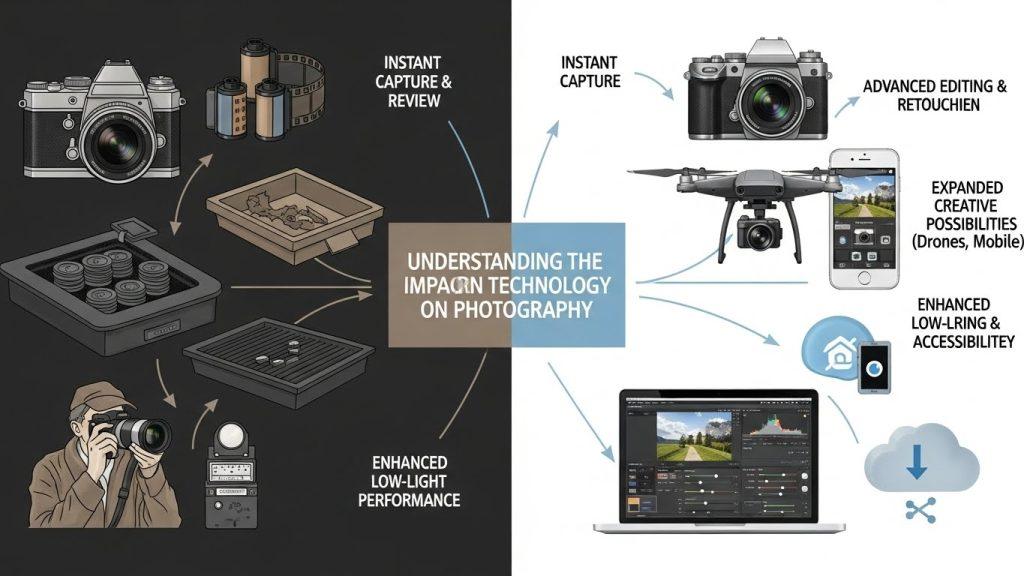
The transition from film to digital photography marks one of the most significant technological shifts in the field. This evolution has made photography more accessible and versatile for both amateur and professional photographers. Digital cameras offer numerous benefits over traditional film cameras, such as the ability to instantly review images, a higher storage capacity, and easier manipulation of images during post-production.
With the advent of digital photography, the digital camera has become ubiquitous, offering a myriad of features that enhance the photographic experience. Not only do digital cameras allow for an increased number of shots without the need to change film rolls, but they also provide higher resolutions and better image quality.
The Rise of Smartphone Photography
Smartphones have revolutionized the way we take photos, making photography an everyday activity for millions of people around the globe. Modern smartphones are equipped with high-quality cameras that rival traditional cameras in terms of image quality. The convenience of carrying a camera in one’s pocket has fundamentally changed how we document our lives.
Smartphones are also equipped with software that enhances images automatically, making it easier for anyone to capture stunning photographs without professional training. The integration of AI technology in smartphone cameras further improves photo quality by optimizing settings like exposure and focus in real-time.

Moreover, the prevalence of smartphones has given rise to social media platforms as major outlets for sharing photography. With just a few taps, images can be shared with a global audience, making photography more social and interactive than ever before.
Post-Processing and Editing Software
Modern technology has dramatically improved the tools available for post-processing and editing photographs. Software like Adobe Photoshop and Lightroom has become essential for photographers, offering a wide range of features that allow for precise adjustments and creative enhancements.
The ability to manipulate images digitally has opened up new possibilities in the realm of creative photography. Photographers can now experiment with color adjustments, filters, and effects to create unique artistic expressions. Additionally, advanced editing software enables the correction of imperfections and enhances the overall quality of images.
For those interested in exploring the technical aspects of image editing, the Adobe Photoshop tutorials offer invaluable resources for mastering this powerful tool.
Emerging Technologies: AI and Machine Learning
Artificial intelligence (AI) and machine learning are at the forefront of technological advancements in photography. These technologies are being integrated into cameras and editing software to enhance the photographic process in numerous ways.
AI-driven cameras can automatically adjust settings for optimal image capture, analyze scenes, and even recognize subjects to ensure the best possible shots. Machine learning algorithms are also used to enhance image quality by reducing noise, improving resolution, and even reconstructing missing parts of an image.
Furthermore, AI is playing a pivotal role in automating repetitive tasks in post-processing, allowing photographers to focus more on the creative aspects of their work. The potential of AI in photography is vast, with ongoing developments promising even more revolutionary changes in the near future.
The Role of Drones in Aerial Photography
Drones have opened up new horizons in the field of aerial photography, offering perspectives that were once difficult or impossible to achieve. Equipped with high-definition cameras, drones allow photographers to capture stunning images and videos from elevated angles.
Aerial photography has found applications in various fields, including real estate, environmental studies, and filmmaking. The ability to survey vast landscapes and capture intricate details from above has made drones an indispensable tool for many photographers.
For those interested in learning more about drone photography, the DJI educational resources provide comprehensive guides and tutorials.
The Impact of Social Media and Online Platforms
Social media platforms have become integral to the world of photography, offering photographers a platform to showcase their work to a global audience. Websites like Instagram, Flickr, and Pinterest have transformed how photographers connect with their audience, allowing for instant feedback and engagement.
These platforms have not only democratized photography by providing a space for emerging artists to gain visibility but have also influenced photographic trends and styles. The popularity of certain aesthetics and themes can be attributed to the viral nature of social media.
In addition, online communities and forums provide valuable opportunities for photographers to collaborate, learn from each other, and stay updated with the latest trends and techniques. The Flickr photography groups are a great example of such communities where photographers can share their work and gain insights from peers.
Takeaways
Modern technology has undeniably transformed the landscape of photography, making it more accessible, versatile, and interactive. From the shift to digital cameras to the rise of smartphone photography and the integration of AI, technological advancements continue to push the boundaries of what is possible in photography. As technology continues to evolve, photographers are presented with endless possibilities to innovate, create, and share their art with the world.
While traditional photography still holds its charm, modern technology offers tools and platforms that enhance the creative potential of photographers, ensuring that the art form continues to thrive in the digital age.
Preserving Photographic Heritage in the Digital Age
As technology evolves, preserving the rich history and heritage of photography has become a focal point for many enthusiasts and professionals. The digitization of historical photographs ensures that these invaluable cultural artifacts are safeguarded for future generations. Digital archives allow anyone to access and appreciate the photographic accomplishments of the past.
Organizations and museums around the world are working tirelessly to convert analog photographs into digital formats. This not only helps in preservation but also in sharing these images with a wider audience through online galleries and exhibits. The Library of Congress offers an extensive digital collection of historical photographs that is freely accessible to the public.
Challenges and Ethical Considerations
While modern technology has brought about significant advancements in photography, it also presents new challenges and ethical considerations. The ease of manipulating digital images raises questions about authenticity and the potential for misinformation. Photographers must navigate the fine line between creative expression and ethical responsibility.
Additionally, privacy concerns have become more pronounced with the widespread sharing of images online. Photographers are often required to obtain consent when capturing identifiable individuals in their work, especially when these images are shared on public platforms. Understanding and adhering to ethical guidelines is essential for maintaining integrity in the field of photography.
Innovations on the Horizon
The future of photography is poised for further innovation as emerging technologies continue to shape the industry. Developments in computational photography, augmented reality (AR), and virtual reality (VR) are set to redefine how we experience and interact with images.
Computational photography combines advanced algorithms with traditional photography to create images that were previously unattainable. This technology enables features like HDR, panoramic stitching, and real-time image enhancement, making photography more dynamic and versatile.
As AR and VR technologies mature, they offer photographers new ways to immerse viewers in their work. Imagine exploring a virtual art gallery or experiencing a photograph in a 360-degree environment. These innovations promise to expand the horizons of photographic storytelling and viewer engagement.
Final Thoughts
The impact of modern technology on photography is profound and far-reaching, influencing every aspect of the photographic process from capture to distribution. While technology presents new challenges, it also offers exciting opportunities for creativity and expression. Photographers who embrace these changes while remaining mindful of the ethical implications will continue to thrive in this ever-evolving landscape.
In conclusion, as technology continues to advance, the world of photography will undoubtedly continue to transform, offering new tools and platforms to both preserve its rich history and pave the way for future innovations. The journey of photography is one of continuous evolution, and its intersection with technology ensures that it remains a powerful and relevant art form in the digital age.
Education and Skill Development in the Digital Era
The technological advancements in photography have also revolutionized the way photographers learn and develop their skills. Online courses, webinars, and tutorials have democratized access to high-quality education, allowing photographers of all levels to enhance their craft from anywhere in the world. Platforms like Coursera offer comprehensive photography courses that cover a wide range of topics, from the basics of camera operation to advanced editing techniques.
The availability of online resources empowers aspiring photographers to learn at their own pace and explore diverse styles and techniques. Moreover, virtual workshops and mentorship programs provide opportunities for personalized feedback and guidance from experienced professionals.
The Role of Community in Modern Photography
One of the most significant impacts of technology on photography is the sense of community it fosters among photographers. Online platforms and social media have created vibrant communities where photographers can connect, share their work, and seek inspiration. These communities play a crucial role in the artistic development of photographers by providing a space for collaboration and critique.
Participating in photography forums and groups allows photographers to gain exposure to different perspectives and styles, enriching their understanding of the art form. The sense of camaraderie and support found in these communities can be a powerful motivator for photographers to push their creative boundaries.
Environmental Considerations and Sustainability
As the photography industry embraces modern technology, there is an increasing focus on sustainability and environmental impact. The shift from film to digital has already reduced the chemical waste associated with traditional film processing. However, photographers are now looking at ways to further minimize their carbon footprint by adopting eco-friendly practices.
Using energy-efficient equipment, reducing electronic waste, and choosing sustainable materials for prints and photo albums are some of the ways photographers can contribute to environmental conservation. Additionally, photography itself can be a powerful tool for raising awareness about environmental issues, as it captures and communicates the beauty and fragility of the natural world.
Conclusion: The Future of Photography
The impact of modern technology on photography is both transformative and multifaceted, offering new opportunities and challenges. As photographers continue to adapt to technological advancements, they have the chance to redefine the art form and explore uncharted creative territories.
Looking ahead, the future of photography is bright, with endless possibilities for innovation and expression. As technology continues to evolve, photographers will find new ways to tell stories, share experiences, and connect with audiences around the globe. Embracing these changes while remaining true to the core principles of photography will ensure that this dynamic art form continues to thrive in the digital age.
Ultimately, the synergy between technology and photography enriches our ability to capture the world around us, preserving moments and memories for generations to come.
About the Author