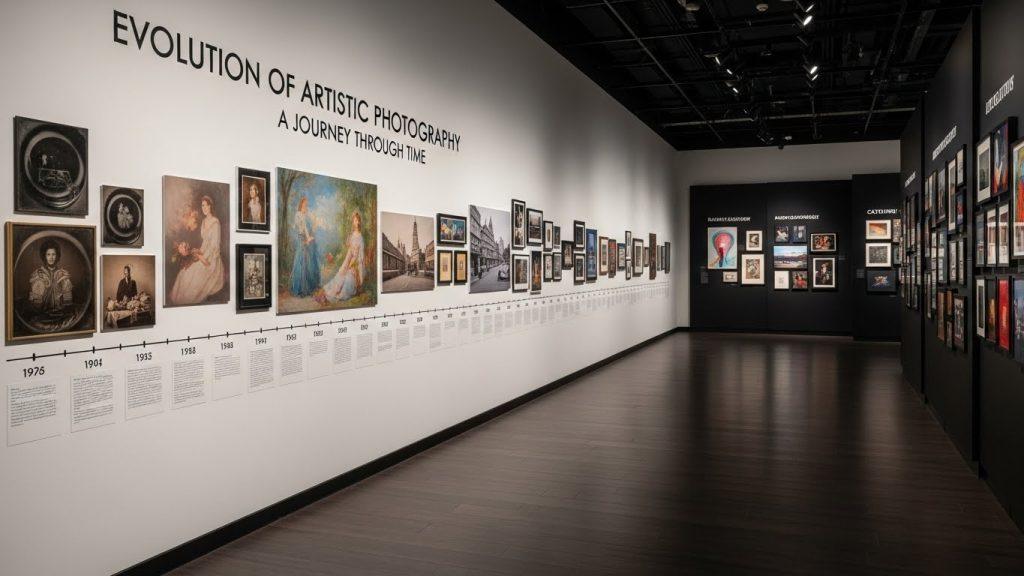
The Evolution of Artistic Photography: A Journey Through Time
Artistic photography has undergone a remarkable evolution since its inception, transforming from a simple tool for documentation to a profound medium for artistic expression. Over the decades, photographers have pushed the boundaries of creativity, exploring new techniques, subjects, and technologies that have redefined what it means to capture art through the lens. This journey through time not only illustrates the growth of the medium but also highlights its enduring impact on culture and society.
The Beginnings of Artistic Photography
In the early 19th century, photography emerged as a revolutionary means of capturing reality. Initially, it was seen predominantly as a scientific and documentary tool. However, pioneers like Henry Peach Robinson began experimenting with staged scenes and composite images, aiming to elevate photography to the status of fine art. Robinson’s work, characterized by its painterly quality and dramatic narratives, challenged the perception of photography as merely a mechanical reproduction of the world.
Meanwhile, Julia Margaret Cameron, another early innovator, emphasized soft focus and dramatic lighting to create ethereal portraits that conveyed emotion and depth. Her work with prominent figures of the Victorian era demonstrated photography’s potential to capture not just likenesses, but also the essence of a subject.
Pictorialism: Blurring the Lines Between Photography and Painting

The late 19th and early 20th centuries saw the rise of the Pictorialist movement, which sought to establish photography as a legitimate art form by emphasizing aesthetics over realism. Pictorialists used techniques such as soft focus, selective toning, and hand-manipulated negatives to create images that resembled paintings. This approach blurred the lines between photography and traditional art, asserting that the photographer’s vision was paramount to the medium.
Alfred Stieglitz, a leading figure in the Pictorialist movement, championed the idea that photography should be recognized as a fine art. Through his influential journal, “Camera Work,” and exhibitions at his New York gallery, Stieglitz showcased the works of photographers who shared his vision, including Edward Steichen and Clarence White.
The Modernist Approach: Embracing Abstraction and Experimentation
As the 20th century progressed, a shift occurred from the romanticized images of Pictorialism to the stark realism and abstraction of the Modernist approach. Photographers like Man Ray and László Moholy-Nagy experimented with new techniques, such as photograms and solarization, to explore photography’s potential for abstraction and surrealism.
During this period, the emphasis was placed on form, line, and composition, with photographers drawing inspiration from contemporary art movements like Cubism and Futurism. The result was a diverse array of works that challenged viewers to see the world through a different lens, often emphasizing geometric shapes and patterns.
Documentary Photography: Capturing Reality with Artistic Intent
While Modernist photographers explored abstraction, others used photography to document social realities with an artistic sensibility. The 1930s and 1940s marked the rise of documentary photography, with figures like Dorothea Lange and Walker Evans capturing the struggles and triumphs of everyday life during the Great Depression.
Their work not only provided a poignant glimpse into the human condition but also highlighted the power of photography to evoke empathy and drive social change. Lange’s iconic image, “Migrant Mother,” remains a testament to the medium’s ability to convey deep emotional resonance through a single frame.
Post-War and Contemporary Trends: Innovation and Diversity
In the post-war era, advances in technology and shifts in cultural attitudes led to an explosion of creativity in artistic photography. The 1960s and 1970s saw photographers like Diane Arbus and Cindy Sherman exploring themes of identity, society, and the self. Arbus’s candid portraits of marginalized individuals challenged conventional standards of beauty, while Sherman’s self-portraits questioned the nature of representation and gender roles.
Digital technology has further expanded the possibilities for artistic photography in recent decades. Photographers can now manipulate images in ways that were previously unimaginable, allowing for the creation of fantastical and hyper-realistic compositions. This has led to the emergence of new genres, such as digital art and mixed media, where photography is often blended with other artistic disciplines.
The Role of Artistic Photography Today
Today, artistic photography continues to evolve, reflecting the dynamic cultural and technological landscape. It serves as a powerful tool for storytelling, activism, and personal expression. Photographers like Alec Soth and Zanele Muholi use their work to address pressing social issues, including race, identity, and the environment, challenging viewers to reconsider their perspectives.
Moreover, the accessibility of photography through smartphones and social media platforms has democratized the medium, allowing more individuals to explore their creativity and share their unique visions with the world. This democratization has sparked a renewed interest in photography as an art form, encouraging a diverse array of voices to contribute to the ongoing dialogue about what constitutes art.
Conclusion: The Enduring Legacy of Artistic Photography
The evolution of artistic photography is a testament to its versatility and enduring impact. From its humble beginnings as a documentary tool to its current status as a multifaceted art form, photography has continually reinvented itself, reflecting the changing times and societal values. As we look to the future, it is clear that artistic photography will continue to play a vital role in shaping our understanding of the world, inspiring new generations of photographers to push the boundaries of creativity and expression.
For those eager to explore the rich history and diverse styles of artistic photography, numerous resources and exhibitions are available, offering a deeper understanding of this ever-evolving medium. Whether through the lens of a camera or the screen of a smartphone, the journey of artistic photography remains a captivating and essential part of our cultural heritage.
The Future of Artistic Photography: Emerging Trends and Technologies
As we move further into the 21st century, artistic photography is poised to embrace several emerging trends and technologies that promise to further redefine the medium. The integration of artificial intelligence (AI) and machine learning into photography is one such development that offers exciting possibilities. AI-powered tools can assist photographers in editing and enhancing images, automating complex processes, and even suggesting creative compositions. These advancements allow artists to focus more on the conceptual aspects of their work, pushing the boundaries of what can be achieved visually.
Another burgeoning trend is the use of augmented reality (AR) and virtual reality (VR) in photography. These technologies enable photographers to create immersive experiences that blend digital elements with the real world, offering viewers new ways to interact with and interpret images. Photographers can craft virtual galleries or incorporate AR elements into physical prints, providing audiences with a multi-dimensional experience.
Furthermore, the rise of blockchain technology and non-fungible tokens (NFTs) has opened up new avenues for photographers to monetize and distribute their work. By minting photographs as NFTs, artists can authenticate and sell digital art in a secure and transparent manner, reaching a global audience without the need for traditional gatekeepers such as galleries or auction houses.
Embracing Diversity and Inclusion in Artistic Photography
As the world becomes more connected, there is a growing emphasis on diversity and inclusion within the realm of artistic photography. Photographers from diverse backgrounds are using their platforms to tell stories that challenge stereotypes and amplify underrepresented voices. This shift not only enriches the photographic landscape but also fosters a more inclusive art community that values a multiplicity of perspectives.
Initiatives and collectives such as Women Photograph and Diversity Photo are dedicated to promoting the work of female and non-binary photographers, as well as those from marginalized communities. By providing support, resources, and opportunities, these organizations are helping to ensure that the world of artistic photography is as diverse and vibrant as the subjects it captures.
The Role of Photography in Environmental Advocacy
In an era marked by environmental challenges, many photographers are leveraging their art to advocate for the planet. Through powerful imagery, artists like Sebastião Salgado and Cristina Mittermeier shine a light on the beauty and fragility of our natural world, as well as the urgent need for conservation efforts. Their work not only raises awareness but also inspires action, reminding audiences of the responsibility we all share in preserving the Earth for future generations.
Photographers are increasingly collaborating with environmental organizations and using social media platforms to reach broader audiences with their messages. This fusion of art and activism is a testament to the enduring impact of photography as a tool for change, capable of moving hearts and minds on a global scale.
Conclusion: The Unending Journey of Artistic Photography
The evolution of artistic photography is a continuous journey, one that reflects the ever-changing nature of art, technology, and society. As new innovations and ideas emerge, photographers will undoubtedly continue to explore uncharted territories, challenging conventional notions and redefining the boundaries of creativity.
In a world where the visual language is more powerful than ever, artistic photography remains a vital means of communication, capable of transcending cultural and linguistic barriers. It serves as a mirror to our collective experiences, capturing moments of beauty, struggle, hope, and transformation.
As we look toward the future, it is clear that the legacy of artistic photography will endure, inspiring generations of artists to come. By embracing new technologies, promoting diversity, and championing causes close to the heart, photographers will continue to shape the world through their lenses, one frame at a time.
About the Author