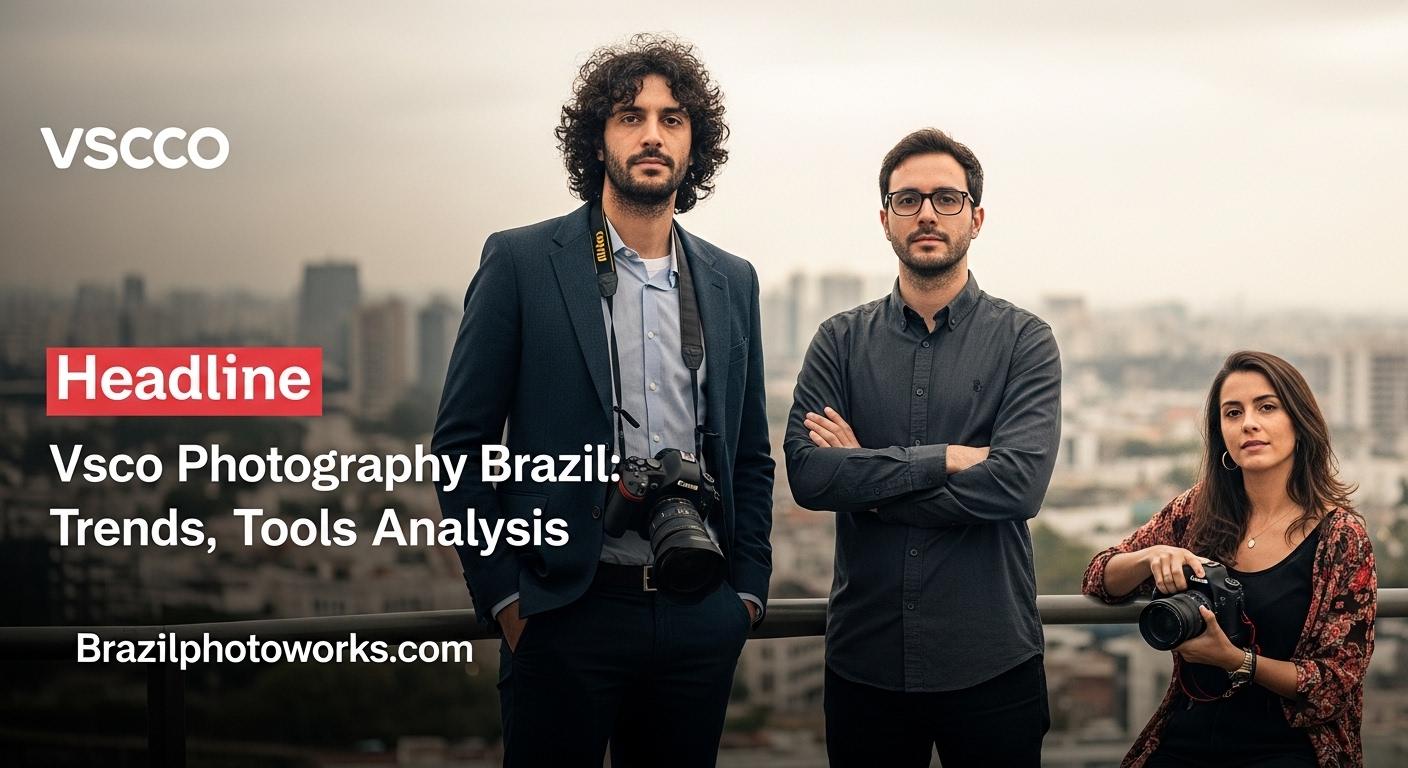
Brazilian photographer editing images with VSCO-like warmth on a laptop against a colorful cityscape.
Updated: March 16, 2026
In Brazil, the convergence of mobile photography culture and the brand identity of vsco Photography Brazil has become a lens through which many local shooters understand value, craft, and community. The aesthetic currency of VSCO—soft light, careful color grading, and a candid sense of everyday life—has matured into a shared language across cities from São Paulo to Recife. This analysis examines how that language flows through workflows, education, and online discourse, and how platform shifts, economic realities, and regional networks influence who shoots, edits, and curates images for public view. Rather than treating VSCO as a single app, this article treats it as ecosystem scaffolding that shapes opportunities, constraints, and the verbs of image-making in contemporary Brazilian photography. By situating VSCO within Brazil’s digital culture, we illuminate why certain editing choices persist, how communities negotiate critique, and what the next phase of the vsco Photography Brazil story might look like for creators, educators, and galleries alike.
Context: Brazil’s Photography Ecosystem and VSCO’s Place
Brazil hosts a constellation of photography communities that blend formal education, informal mentorship, and social media-driven discovery. In urban centers, aspiring shooters encounter a saturated market where speed, accessibility, and a distinctive tonal language can translate into visibility and opportunity. VSCO’s platform cultivated a particular tempo: a focus on deliberate edits, a culture of quiet curation, and a shared vocabulary around warmth, texture, and minimal distractions. This has created a feedback loop where emerging photographers model their work after widely circulated edits, then reinterpret them to reflect Brazilian light, architecture, and street life. The effect is not a uniform style, but a recognizable palette—ened by the local perception of color, climate, and daily rhythm—that travels across different genres, from street photography to documentary practice. The Brazilian audience, meanwhile, values a balance between authenticity and polish, seeking images that feel both immediate and thoughtfully resolved. This dynamic helps explain why VSCO remains a powerful reference point in conversations about technique, identity, and professional aspiration.
Beyond aesthetics, VSCO’s community structure—profiles, feeds, and curated showcases—acts as a social education mechanism. Younger photographers learn by observing project flows, sequencing, and how edits influence the narrative of a series. In turn, educators and mentors incite critical feedback through online threads and in-person conversations at festivals and schools. The Brazilian photography ecosystem thus resembles a living workshop where platform conventions shape what is taught, what is valued, and what counts as credible practice. The result is a shared literacy that proceeds with careful attention to both global trends and regional realities, including issues of equipment access, urban safety, and the political economy of image making in Brazil.
Platform Dynamics: Updates, Access, and Local Adoption
Platform updates in the digital photography space often reach Brazil with a mix of excitement and pragmatic caution. The emergence of standalone features or apps—such as galleries and curated collections—can reframe how images are gathered, stored, and shown to audiences. Local photographers track these developments not only for technique but for opportunities to reach new clients, galleries, and collaborators. The adoption arc is shaped by device penetration, data costs, and internet reliability, which in turn influence how and when people edit in the field versus in post-production suites. In this context, VSCO’s evolving toolkit becomes more than a set of filters; it becomes a workflow anchor that can streamline process, enable modular storytelling, and facilitate cross-city collaboration. At the same time, platform shifts can reset expectations about visibility and attribution, pushing photographers to diversify where they publish, how they credit collaborators, and how they curate narrative debt across multiple channels.
In Brazil, the tension between global platform logic and local practice is most visible in how editing choices align with the visual grammar that Brazilian audiences expect. Editor-led sequences, tonal consistency, and the balance between candid moments and constructed scenes are all calibrated against the prevailing feeds of Brazilian social networks. This calibration often means photographers negotiate between a distinct warm tonal range and the need to preserve skin tones, concrete textures, and the vibrancy of urban color. Platform features that encourage longer-form projects or portfolio-style presentations may propel more documentary work, while algorithmic feeds that favor frequently refreshed content can push creators toward serialized posting. The practical impact is a generation of Brazilian photographers who think in terms of both offline projects and online arcs, designing images that function effectively as standalone pieces and as parts of larger visual narratives.
Economic, Cultural, and Policy Shifts Shaping Visual Storytelling
Brazil’s broader economic and cultural context inevitably colors how photographers operate. Access to equipment and editing software remains uneven, prompting many creators to leverage smartphones and affordable tools while learning to maximize sensor performance, dynamic range, and color science. This translates into a pragmatic pedagogical approach: teach the fundamentals of light, composition, and critique, then demonstrate how a few well-chosen adjustments can evoke a spectrum of moods. Culture and policy interplay in subtle but consequential ways. Public funding for arts programs, residency opportunities, and gallery exposure can propel a photographer from hobbyist to professional; conversely, market pressures and job precarity can limit experimentation. The result is a photography scene that values discipline and adaptability—skills that align well with VSCO’s emphasis on deliberate editing and thoughtful presentation. The macro environment—economic shifts, education funding, and media policy—thus provides both challenges and openings for those who wish to build sustainable practice in Brazil.
Social and environmental narratives also filter into the work. Brazilian photographers increasingly address themes such as urban resilience, community stories, and the intersection of tradition and modernity. VSCO’s aesthetic framework supports this by offering a quiet, respectful platform for nuanced portrayal. Yet the balance between documentary honesty and stylistic polish remains a live debate, as practitioners weigh the ethics of representation, consent, and consent-aware storytelling in public spaces. In this sense, the platform becomes a workshop for developing critical reflexivity—an essential ingredient for responsible practice in a diverse and rapidly changing country.
Community, Critique, and Opportunities for Brazil’s Photographers
Critique in the Brazilian VSCO community is both informal and structured. Peer feedback, curated showcases, and regional meetups provide spaces where photographers can test ideas, refine editing choices, and negotiate taste with a broad audience. The ongoing dialog helps elevate standards while also fostering innovation, as practitioners experiment with cross-genre collaborations, editorial assignments, and experimental narratives that push beyond conventional street or travel photography. Opportunities arise where photographers can leverage VSCO’s network to connect with editors, galleries, and educators who value a distinctive Brazilian lens. However, this requires intentional portfolio development, clear attribution practices, and a willingness to engage with audiences across multiple platforms. The result is a more resilient community that can translate local stories into broader conversations about photography, identity, and memory in Brazil.
Looking ahead, Brazil’s photographers may increasingly integrate learning platforms, local exhibitions, and diaspora networks to diversify income streams and expand reach. The VSCO ecosystem, if navigated thoughtfully, can support such integration by enabling modular storytelling, project sequencing, and cross-border collaboration. The explicit test for the near term is whether the community can sustain critical discourse that remains generous and rigorous, while also adapting to market realities and platform evolutions. The deeper promise is that a robust, locally informed practice can contribute to a global conversation about photography that respects Brazil’s complexity, color, and noise as core creative assets.
Actionable Takeaways
- Develop a clear, modular project workflow that translates well on VSCO and other platforms, enabling easy adaptation between online portfolios and gallery-ready bodies of work.
- Foster peer critique circles that emphasize ethical representation, consent, and culturally attuned storytelling to sustain credible practice.
- Balance stylistic preference with accessibility: ensure color science and tonal decisions preserve skin tones and textures for diverse audiences.
- diversify publication channels to mitigate platform risk by pairing VSCO-focused work with exhibitions, zines, and editorial collaborations.
- Invest in documentation and credits: maintain transparent attribution for collaborators, editors, and locations to build trust and professional credibility.
Source Context
For background on platform evolution and its potential impact on Brazilian photographers, see the following sources: