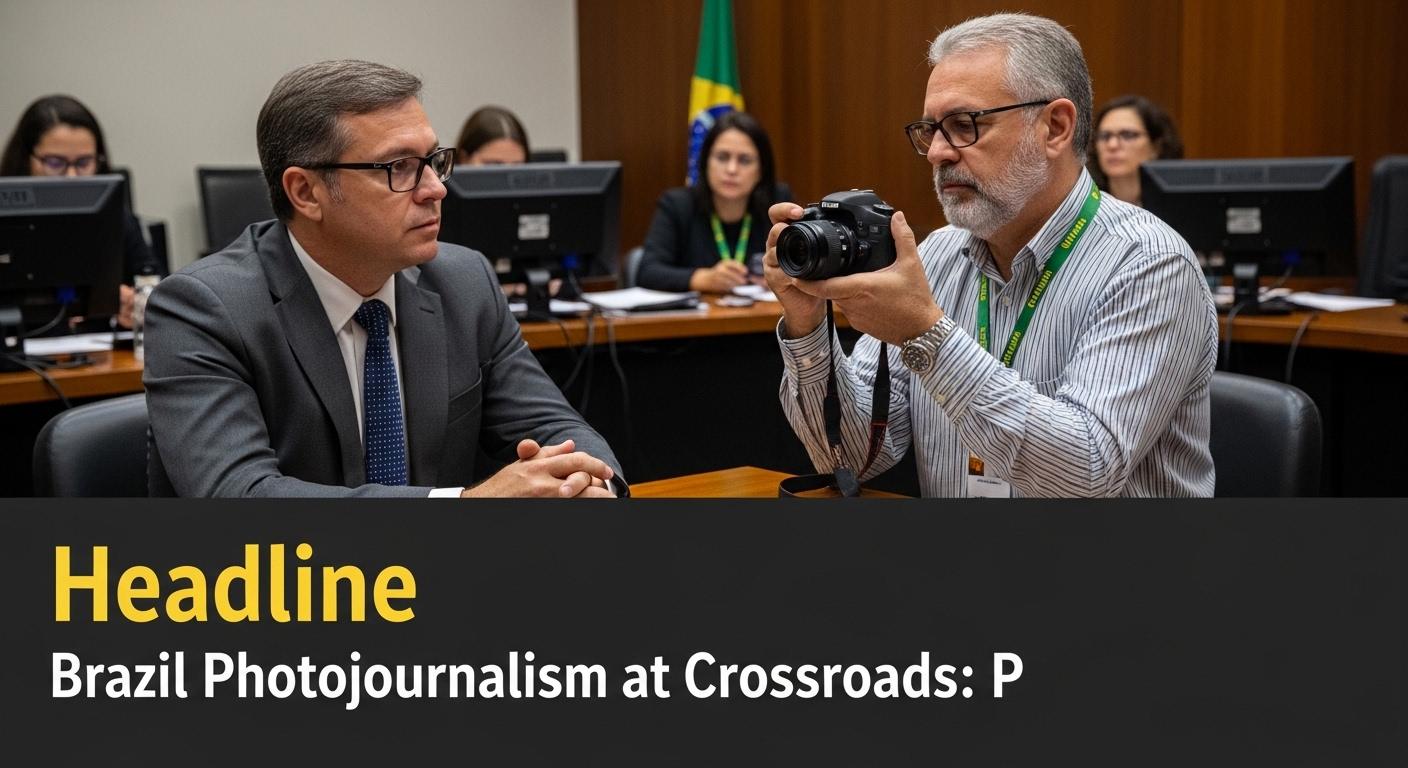
Brazilian photographer documenting a public rally in a bustling cityscape, capturing expressions and movement.
Updated: March 16, 2026
In Brazil’s street-level storytelling, the field of brazil Photography Brazil is evolving from a purely aesthetic pursuit into a practice of social documentation, policy critique, and memory building across cities and communities. Photographers, editors, and funders are negotiating what to show, when to show it, and how images travel across feeds, galleries, and classrooms.
The photographer as witness in a volatile public sphere
Photographers in Brazil operate at the intersection of public life, policy, and memory. Access is often earned through relationship building with communities, editors, and institutions. The ethics of timing, framing, and consent become central when images can influence public opinion or legal outcomes. In this tense environment, photographers must weigh the immediacy of a scene against the long arc of a story, recognizing that a single frame can become a symbol long after the event has faded from daily headlines. The best practitioners cultivate long-term trust with communities, enabling closer access to nuances that headlines miss, such as informal negotiations during protests, or how families cope with policy change in the wake of a tragedy.
Image governance: memory, censorship, and audience in Brazil
Images do not merely depict reality; they help construct it. In Brazil, archives, museums, and media platforms shape how a photographic moment becomes part of collective memory. Censorship questions are often framed not as outright bans but as operational pressures: editors may request changes, or funders may prioritize certain narratives over others. For readers, the proliferation of social media amplifies both accountability and risk, as a photo can be miscontextualized within minutes. The discipline of documentary practice therefore includes careful metadata, responsible captioning, and a strategy for archiving material so that future researchers can trace a frame’s journey across platforms and time.
Tools, craft, and access in contemporary Brazilian photography
Technological shifts have lowered barriers to entry but raised questions about consistency and craft. Mobile reporting enables rapid coverage of street-level events, but photographers still rely on deliberate technique—composition, light management, and post-processing choices that preserve credibility. In Brazilian settings, light varies from sun-drenched avenues to shadowed alleys, demanding adaptive skills and a disciplined approach to color or grayscale. Funding structures, from fellowships to community projects, increasingly emphasize long-form investigation, not just sensational snapshots. That shift encourages photographers to diversify their portfolios, maintain robust backups, and develop storytelling through sequential images and audio-visual pieces.
Market, platforms, and the business of documentary photography
The economics of documentary work in Brazil are evolving as galleries, magazines, and digital platforms seek authentic voices from the country’s diverse regions. Photographers often juggle assignments for editorial clients with independent projects that seek foundation support or grant funding. The rise of open-source archives and creative commons models also influences how images circulate, sometimes challenging traditional licensing frameworks. For practitioners, practical steps include building a consistent body of work, cultivating editorial relationships, and leveraging local festivals or photobook fairs to reach collectors and educators. In this environment, the photographer’s decision about when to publish, how to caption, and which institutions to partner with can determine a project’s reach and impact.
Actionable Takeaways
- Develop ongoing relationships with local communities and editors to secure context-rich access.
- Document not only moments but their causes, durations, and outcomes to support nuanced storytelling.
- Adopt an archival workflow: metadata, backups, and clear licensing terms from the outset.
- Balance speed with accuracy by validating captions and sourcing information before publishing.
- Experiment with long-form projects and multi-format storytelling to reach diverse audiences.
- Consider ethics training and peer review to maintain credibility in sensitive assignments.
Source Context
From an editorial perspective, separate confirmed facts from early speculation and revisit assumptions as new verified information appears.
Track official statements, compare independent outlets, and focus on what is confirmed versus what remains under investigation.
For practical decisions, evaluate near-term risk, likely scenarios, and timing before reacting to fast-moving headlines.
Use source quality checks: publication reputation, named attribution, publication time, and consistency across multiple reports.
Cross-check key numbers, proper names, and dates before drawing conclusions; early reporting can shift as agencies, teams, or companies release fuller context.